TRANSIT has launched its new key theme, ‘Polarisation and social cohesion’. A look back at the event held on 21 October in Lausanne.
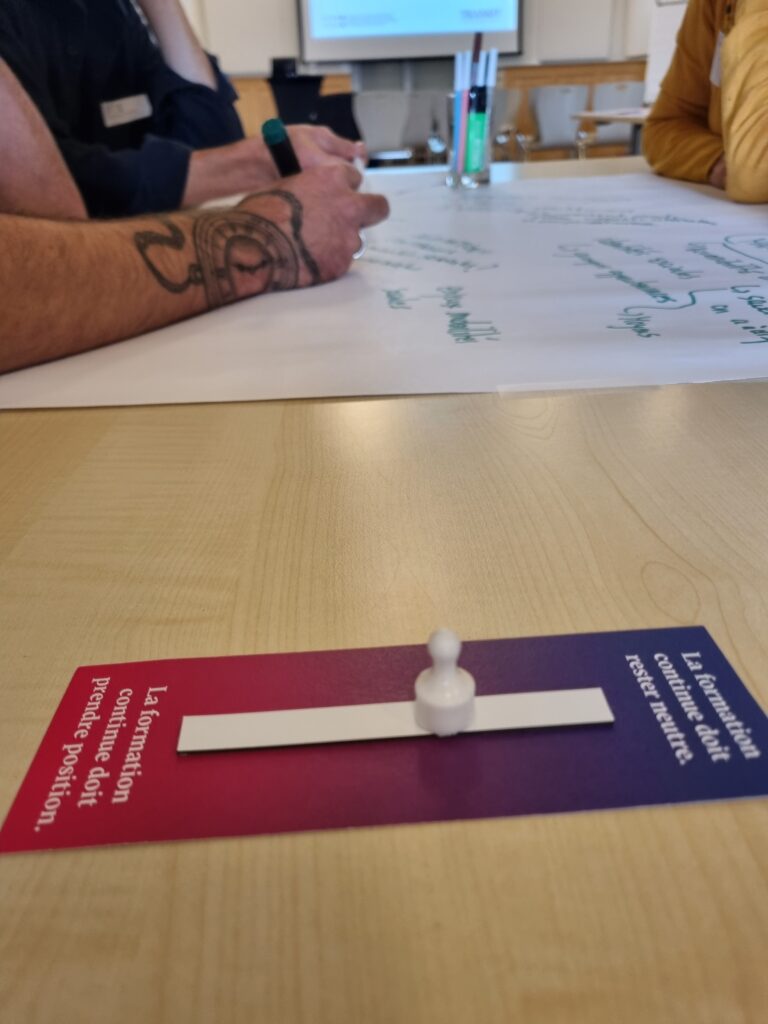
‘Adult learning and education must remain neutral’ Or: ‘Adult learning and education must take a stand’. Where do you stand?
This was the question that opened the TRANSIT event on 21 October. Right from the start, it became clear that there were no clear-cut answers, that it depended on the context, and that new questions were emerging. Can adult learning and education really be neutral? Does its own approach not stand in the way of open reflection on differing viewpoints? And so on.
With this event (held in Zurich on 14 September and in Lausanne on 21 October), TRANSIT launched its new key theme: ‘Polarisation and social cohesion’. The aim was to develop a shared understanding of polarisation, to gather ideas for the next trends report and to create an inspiring space for reflection.
The dimensions of polarisation
By way of introduction, we defined what the TRANSIT think tank means by «polarisation», namely a social process in which differences between groups, social backgrounds and interpretations become more pronounced or become entrenched. Polarisation is not problematic in itself. It becomes so when it hinders understanding, weakens shared points of reference or contributes to inequalities in life chances.
For TRANSIT, the central question is therefore what role adult learning and education can play to ensure that social differences do not lead to exclusion, devaluation or a breakdown in understanding, but rather strengthen participation and cohesion. TRANSIT focuses on four dimensions within the framework of this new central theme: political, economic, social and technological.
Interview with Johanna Hornung
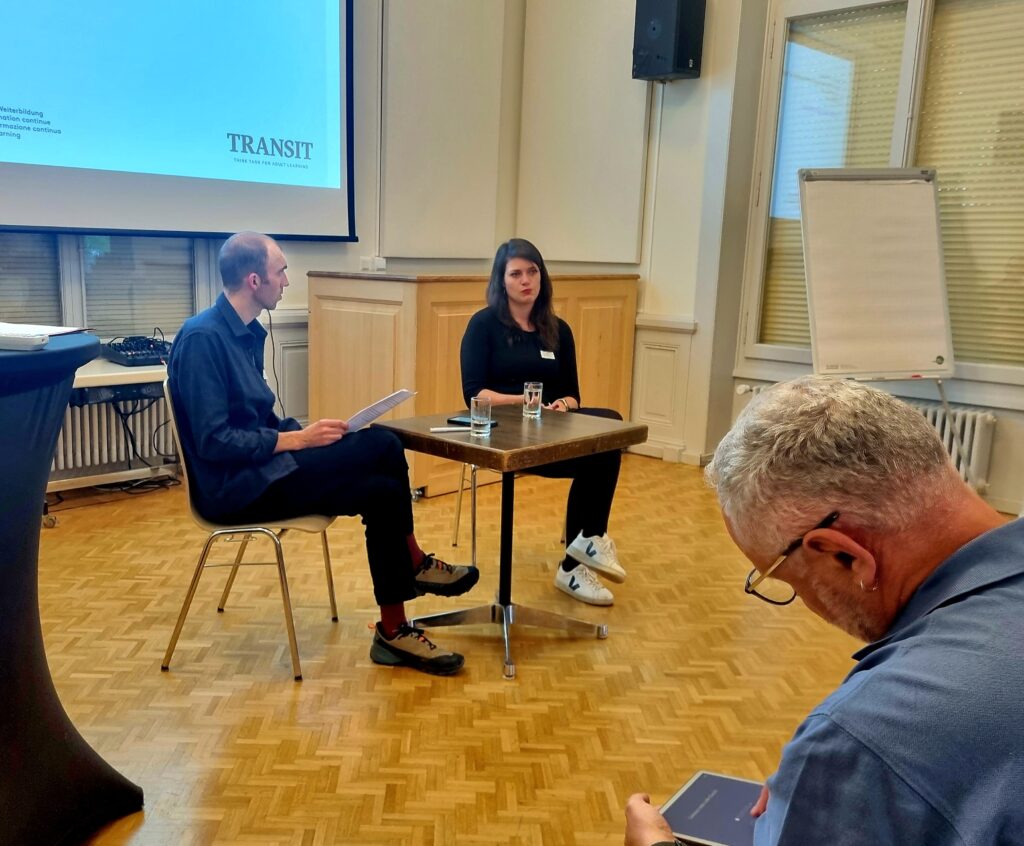
Following this introduction, Johanna Hornung, Professor of Political Science at the University of Lausanne and a specialist in public policy, answered our questions in a fascinating interview which will soon be published in full on the TRANSIT website. In particular, she addressed the various dimensions and concepts surrounding polarisation, as well as the complex role of science in public policy decisions, drawing on numerous research projects in which she has participated – whether on COVID-19, military service or climate change.
World Café
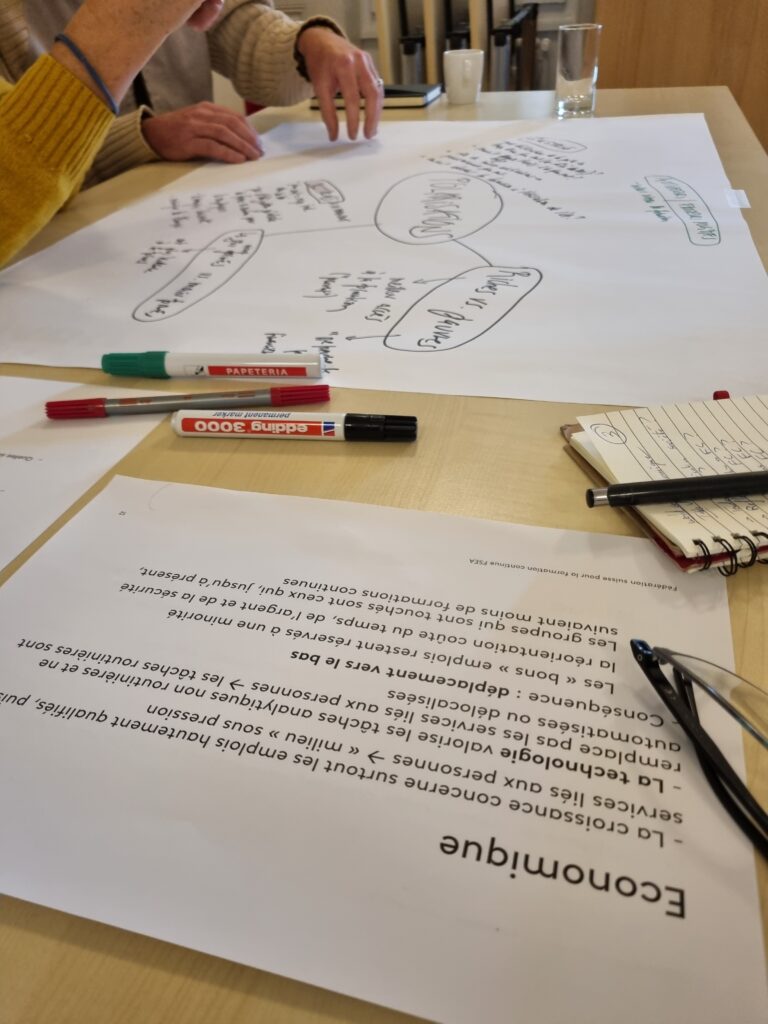
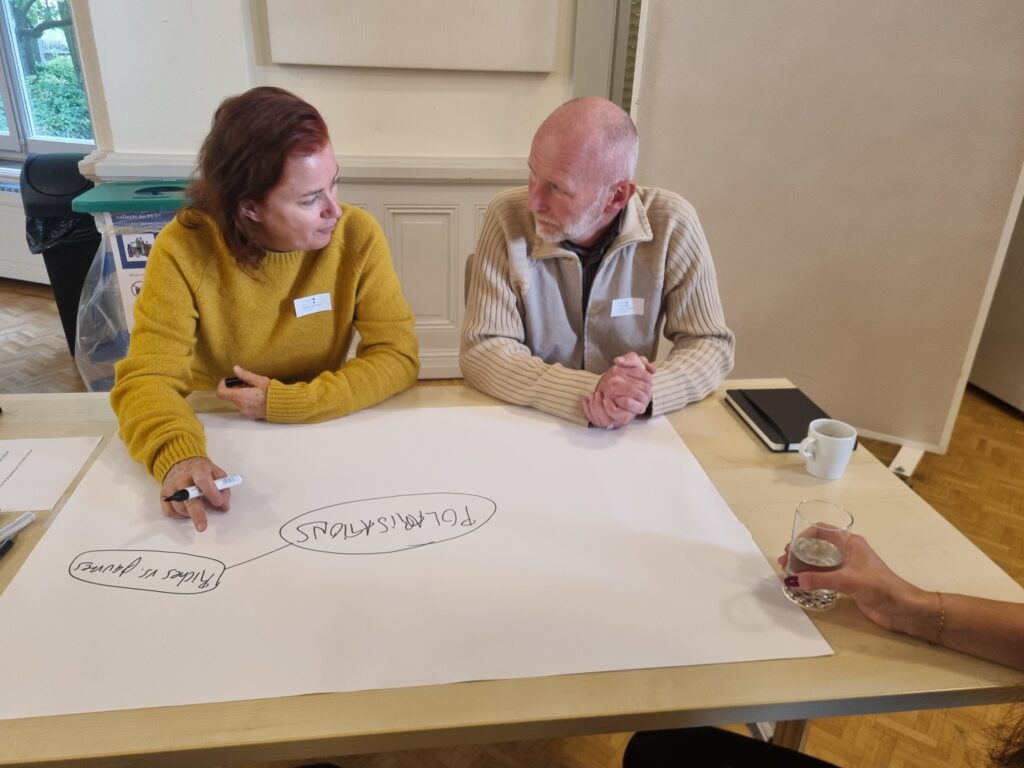
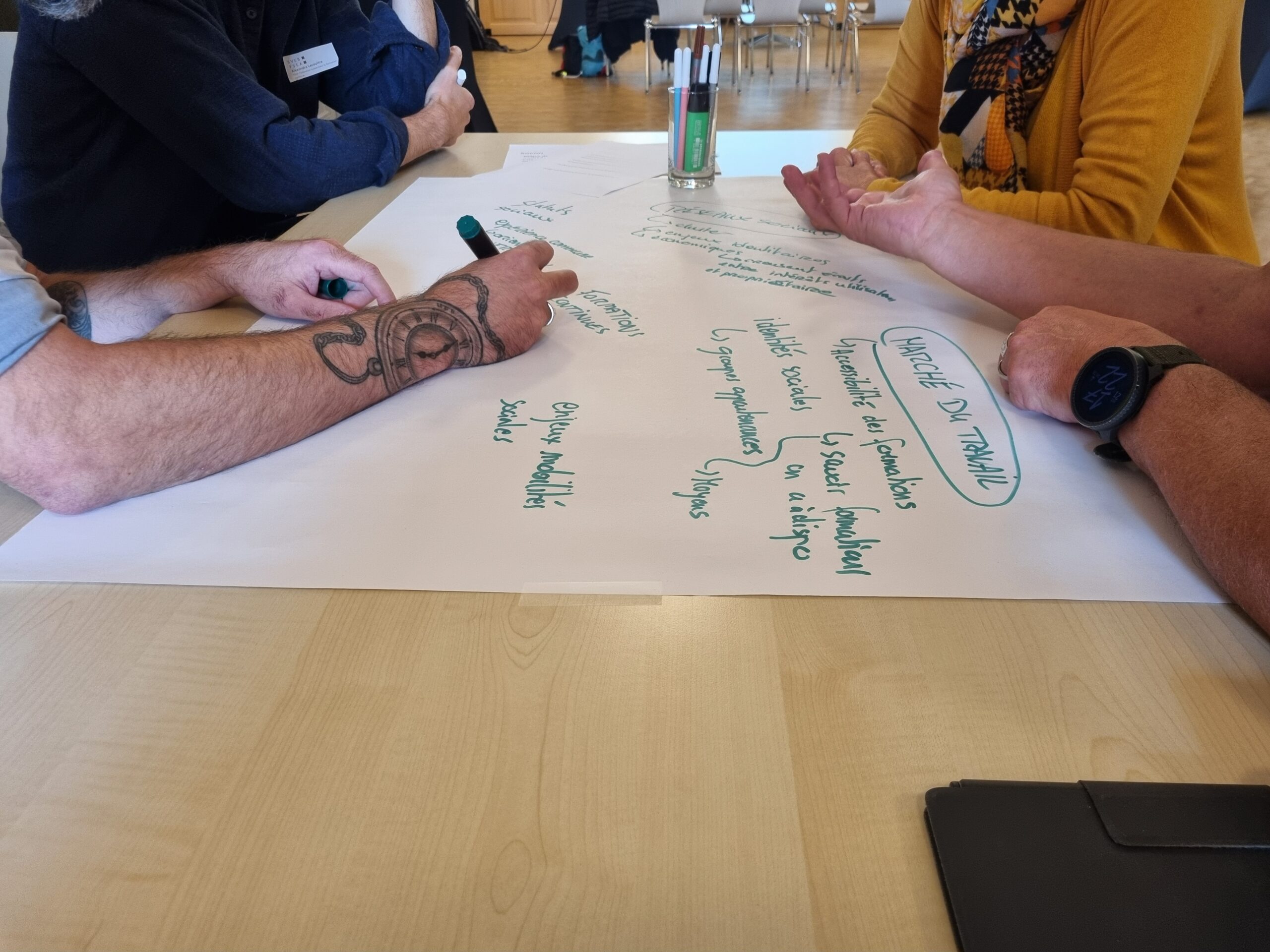
The second part took the form of a ‘World Café’, where, following Johanna Hornung’s presentation, participants discussed the challenges for adult learning and education from the perspective of their own professional contexts and realities. What roles can adult learning and education play to ensure that polarisation is used productively and does not become problematic? What are the implications and prospects for adult learning and education? These were among the questions they reflected on and debated in relation to the various fields. The discussions were lively, and the sheets of paper stuck to the tables quickly filled with keywords, arrows, questions and counter-questions.
Outlook
The discussions will be incorporated into the next TRANSIT trends report. They already show that polarisation, and the resulting divisions, represent a major challenge for adult learning and education. It also became clear that adult learning and education cannot simply dispel trends towards polarisation and divisions. However, it can address them and explore different scenarios for the future. We would like to thank all the participants for these inspiring discussions.