
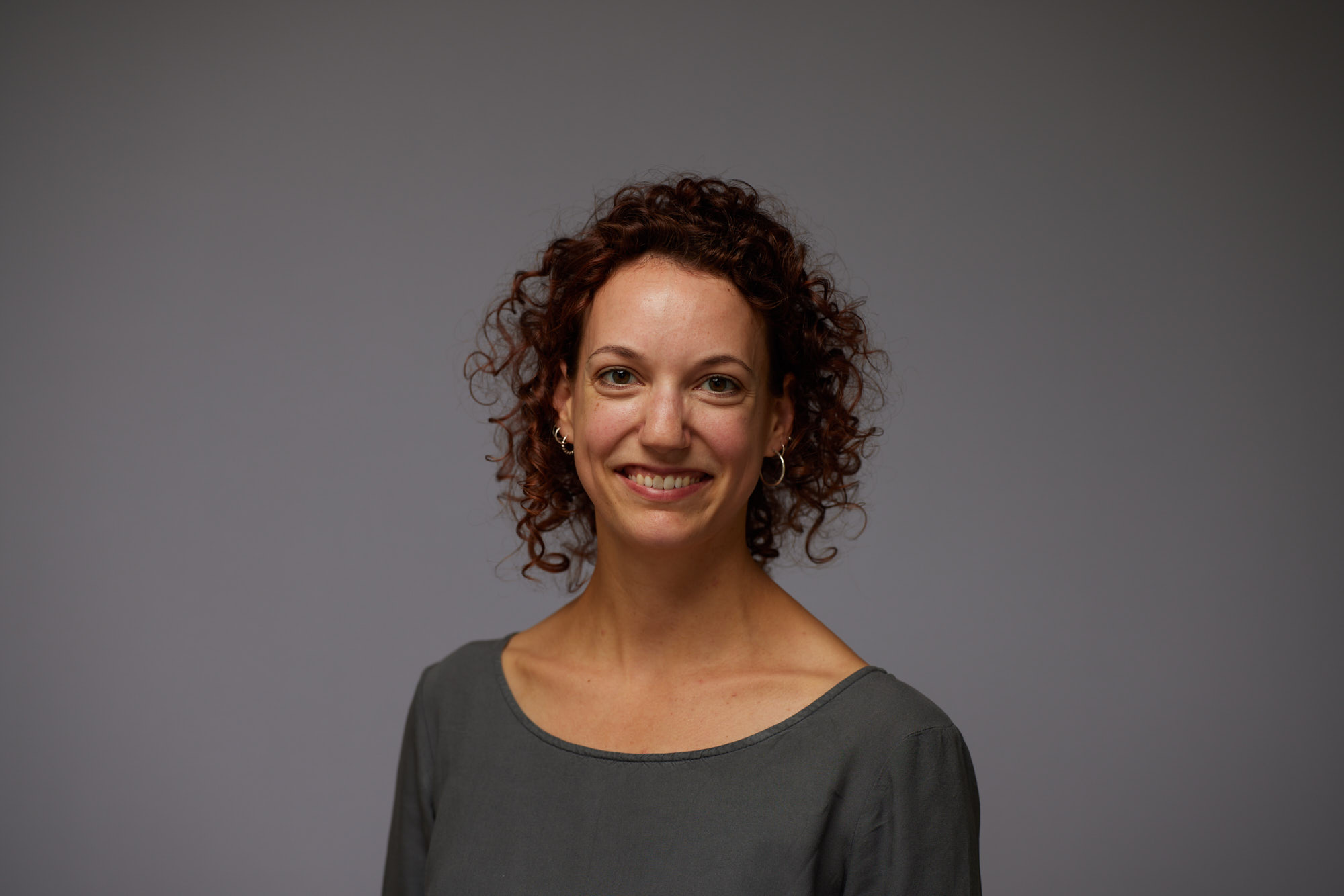
About Isabel Schuler
Isabel Schuler is a project manager at Pro Futuris, the Think + Do Tank of the Swiss Society for the Common Good (SSCG). She is the co-author of the study series on polarisation and cohesion and a co-project manager of “Unternehmen für Demokratie” (Businesses for Democracy). Isabel Schuler studied international relations, civic education and political science in Geneva, Linz and Bern.
When people talk about polarisation, it is usually considered a problem for society. Is polarisation inherently problematic?
No. There is a distinction that is very important to us. The term polarisation often covers a wide range of very different phenomena. First of all, political polarisation means that people have different political opinions. In general, such a wide range of opinions is a good thing in a pluralistic society. Our political system has been designed to accommodate many different positions, which people then have to negotiate with each other.
It can become a problem when there is affective polarisation. In this case, it is no longer just a matter of someone’s opinion being different than mine. It is about how I respond to that person. To put it simply, I like people who share my views and I regard them as part of my in-group, and I reject people with views that are different than mine (out-group). And I do this regardless of what they actually say.
A good comparison is with football fans: I support my club and do not like the other fans simply on the basis that they belong to another club. In a democracy, it becomes difficult if we apply this pattern of behaviour to people with different political views than our own and when – at some point – it reaches the stage where we no longer want to talk to them or try to find solutions together.
People often talk about an increasingly polarised society. Does this apply to Switzerland?
It depends what kind of polarisation we are talking about. There have been a very wide range of different positions in Switzerland’s political landscape for a long time. When it comes to affective polarisation, however, the evidence is less clear.
For example, a long-term study by Benjamin Jansen and Alois Stutzer shows an increase in affective partisan polarisation between 1999 and 2003, but no clear further upward trend over the following two decades. At the very least, this goes against the simple narrative that we have been drifting further and further apart for years.
This is why I think it is important to start with a precise question: what kind of polarisation are we actually talking about?The fact that people have different views is not a democratic problem. What matters is how we deal with such differences.
At Pro Futuris, you carried out a three-part series of studies examining how affective polarisation is manifested in Switzerland. What surprised you in particular?
In the first part, we looked at eight political issues. The strongest affective polarisation was on the subjects of immigration, measures during the pandemic and support for Ukraine. The survey was carried out in the summer of 2024. The fact that immigration is highly polarising was not much of a surprise. What was more unexpected was that the measures during the pandemic still provoked such strong emotions.
At this time there had, for a while, been hardly any more measures that affected the population directly. Nevertheless, the experiences were still clearly felt. The pandemic was not just a public health issue. It also raised questions about how much the state should be allowed to intervene, how individual freedom should be weighed against collective responsibility and how people experienced the conflicts of the time.
Another finding surprised us as well: issues such as the welfare state and how it is funded, gender equality and the protection of sexual minorities had clearly less emotional polarisation. That is interesting because some of these issues feature prominently in public and media discussions. If a public debate is highly charged, it does not automatically mean the issue leads to particularly high affective polarisation among the population.
In the second study, you examined levels of sympathy and antipathy towards political parties and their voters. Which results surprised you?
The results concerning the parties and their voters were not much of a surprise. As expected, people expressed greater sympathy towards voters of their own party than towards those of other parties. What I found interesting was that both “The Centre” voters and “The Centre” party itself tended to receive high levels of sympathy from both the left and the right. In contrast, The Centre voters did not show such high levels of sympathy towards the other political camps. We also noticed that, on the whole, there was more antipathy from the right towards the left than the other way round. The patterns of rejection were not symmetrical.
As for the social groups we surveyed, opponents of measures during the pandemic and climate activists attracted the most antipathy. Both are highly politicised groups that have also received considerable media attention. The high level of antipathy towards asylum seekers was also astonishing because – compared with the other two groups – they do not necessarily put themselves in the public spotlight.
When does this kind of antipathy become a problem for social cohesion?
Antipathy itself is not the decisive problem. I do not have to like everyone whose political views are different than mine. The crucial point comes when I am no longer willing to give them a place at the table.
In the third part of our study, we therefore took a closer look at three attitudes: the value people place on exchanging with those with different views than them, the willingness to compromise and the question of whether people would be willing to exclude a political party they particularly dislike from the political process or from public discourse.
This reveals an interesting tension. Around three quarters of respondents said that they consider it valuable to exchange with people who hold different political views than them. At the same time, more than one third believed that Switzerland would be better off if the party they disliked most were excluded from the political process or public discourse.
We also found connections between greater affective polarisation and a lower appreciation of exchanging with other people, and also a reduced willingness to compromise and greater readiness to exclude others. It is important to say, however, that our data can be used to describe connections but not to establish clear causal relationships. So we cannot simply know if one thing causes another.
How much polarisation can a democracy withstand?
A lot, I believe. A democracy has to be able to accommodate different interests, values and ideas. That is what it is there for. But we need spaces where people with different political views and different lives can actually meet and interact with one another. And we need forms of exchange in which it is not immediately about establishing who wins and who is right. If people believe political discussion simply means shouting at each another, interrupting each other and defending your position as quickly as possible, it is understandable that a lot of people are not interested. We need to show that political disagreement can also be friendly and interesting. That it is possible to hold different opinions, listen to one another and still go for a coffee together afterwards.
Pro Futuris works with various dialogue formats. What makes a dialogue different from traditional political debate?
In dialogue, it is at least as important to listen as it is to speak. In our “Lasst uns reden” (Let’s Talk) format, for example, we have brought together people whose positions are as different as possible. They first state their position on a particular question, and then we form pairs whose views are as opposed to one another as possible. The discussion which then follows between two people is highly structured: one person is given time to explain their perspective without being immediately interrupted or challenged. The other person listens and, initially, may ask questions to make sure they understand. The roles are then reversed. It sounds very simple but it is demanding. The reason is that, when listening to another person, we are often already thinking: what am I going to say in response? How can I disagree with them? How can I get my own point across?
In dialogue we try to approach things differently: tell me why you think that way. What experiences have shaped your views? What are the interests or needs underlying your position? This understanding makes someone else’s position much easier to comprehend, and people often realise that, even though they have opposing views, their needs are not actually so different. On the surface we see their demand or their political position. Beneath the surface are experiences, needs, fears and interests. As long as we remain focused solely on people’s positions, we will not discover the things we have in common. The sessions of “Lasst uns reden” carried out so far show that improvements can be made in how much trust people have in the opposing political side and in their perceptions of those who think differently.
So we need to learn to listen better. Is there also something we need to unlearn?
Maybe the idea that we always have to respond immediately and defend our position. People sometimes say: are you really listening or are you just waiting for your turn to speak? I think it is relatively rare that we listen simply because we are interested. That, precisely, is an important democratic skill: at first being able to tolerate another perspective without immediately judging or refuting it.
This does not mean that we should accept everything or abandon our own opinions. But democracy requires a culture in which people can disagree without ending their relationship.
You talk about democratic skills. Can democracy really be learned?
Absolutely. Democracy is much more than just electing people and voting. It is also a democratic culture: collectively negotiating the rules which govern how we live together and working together to try to find solutions. This requires a range of abilities: the ability to compromise, to change perspective and to show empathy, but also the ability to form and discuss opinions, media literacy, political and factual knowledge and a willingness to help shape society.
I think the image of a muscle is appropriate. We can learn these things, but we also have to practise and train them. Just because we live in a direct democracy, we cannot assume we automatically have these abilities.
What role could adult education play here?
When people hear the term political or civic education, many of them think of school first. That is too narrow a view. Adults need these skills just as much, so they need to train them accordingly.
I see two possibilities here. On the one hand, there could be specific programmes designed particularly to train such democratic skills: changing perspectives, listening, trying to find compromises, tolerating different positions. On the other hand, these abilities could also be incorporated into existing adult education programmes. I am a little wary about this second approach, however. If something is treated merely as a cross-cutting issue, it can easily fall by the wayside when time or resources become limited. So I think it is definitely important to have dedicated programmes.
Adult education is interesting for another reason, too: it brings together adults with different experiences and potentially different political views. The same is true of companies. The workplace is one of the places where, in everyday life, we meet people we have not chosen to meet. Such places can therefore also act as spaces for democratic encounters.
So should adult education deliberately create spaces where people with different views come together?
I think so. But we should not underestimate what is required for this. When battle lines are already deeply entrenched or a conflict has escalated, it is not enough to just put people in a room and tell them: talk to one another. Processes of this kind require a very well moderated and curated setting. People without any experience in dialogue or mediation can quickly find themselves reaching their limits.
For adult education there are also some difficult questions: what does neutrality mean? As a course leader, which views can and do I want to accommodate within a room? Where do I need to set boundaries? There is no simple answer to these questions. The aim, however, should be to provide space for different perspectives and, at the same time, to create a setting in which serious exchange remains possible.
If we look beyond adult education to society as a whole: what do we need in order to continue dealing with differences in the future?
This cannot be achieved with one single measure. We need to take action in a number of different areas. One of them is the media landscape. Polarising and highly emotionalised content attracts attention. That is why we need media diversity and spaces for journalism that feature different issues and perspectives without relying mainly on people’s outrage to attract attention. Another measure is creating places where people can meet. Volunteering, for example, can bring people together who might otherwise never meet. According to our data, there is a connection between voluntary work and a greater willingness to compromise, for instance, and our study series also shows links with lower levels of affective polarisation.
And, finally, we need dialogue. Not because the aim is for everyone to ultimately have the same opinion. Instead, we need it to again learn to see the people behind the views they hold. That is the most important democratic skill: not to want to eliminate differences, but to remain capable of acting even though differences exist.