
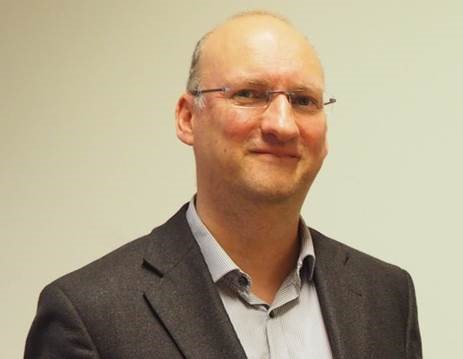
About Andreas Hadjar
Prof. Dr. Andreas Hadjar is Professor of Sociology, Social Policy and Social Research at the University of Fribourg. In his research and publications, he focuses on inequalities in the level of education attained and also the opportunities people have in the labour market and other areas of life. One of his main interests is the question of how educational systems, welfare state regimes and other social characteristics shape inequalities.
Mr Hadjar, for many years you have been working on questions of social inequality in the education system. Why is this topic so fascinating for you personally?
The topic is of great relevance because it affects individuals as much as it affects society as a whole. Systematic disadvantages inherent in the system in early stages of life – this is the basis of the problem of social inequalities – have consequences throughout a person’s life. People who experience educational disadvantages and educational poverty are at greater risk of being unemployed, they are more likely to have lower incomes and to participate less in political life, and this can also have a negative impact on their well-being, health and, ultimately, life expectancy. It is an individual problem if the lives of those with the lowest level of education are, on average, ten years shorter than the lives of those with the highes level of education. Looked at for the whole of society, however, this also becomes a social problem. Inequalities in society as a whole mean people’s talents remain unused so there are groups that have potential but cannot contribute to social progress, either culturally or economically. In addition, inequality can also undermine stability in society.
The idea behind a meritocracy is that educational success, and therefore also access to social positions, are based entirely on an individual’s performance and talent. Is this really the case?
Empirical findings confirm that, as a performance characteristic, education plays a crucial role in the labour market – this is indeed one of the ideas of a meritocracy or the meritocratic triad. However, we can see that there is still inequality in access to education and educational attainment, including the acquisition of qualifications. In other words, it is not only talent and effort that matter, as emphasised in the classic concept of a meritocracy, but also class of origin, gender, migration background and, more recently, disability. As a cause of inequality, this has been largely neglected in discussions on meritocracy. As a result, educational success continues to depend on characteristics that are not based on performance and are therefore ascriptive.
You mentioned the meritocratic triad. Can you explain this idea in more detail?
The meritocratic triad refers to the relationship between a person’s class of origin and the class they achieve in life, their class of destination. As society becomes more meritocratic, this relationship is determined increasingly by a person’s education. The concept therefore describes a model with three factors that connects these three elements together – class of origin, education and social position in adulthood.In other words, education is supposed to be the decisive characteristic when determining the occupation people enter and their social class. According to the actual understanding of meritocracy – though there are different interpretations among researchers – ideally, in a meritocracy, education itself should no longer depend on a person’s class of origin.
How far have we come towards realising a meritocratic ideal, and what changes have there been in educational inequalities in recent decades?
In recent decades there has been a definite decrease in educational inequalities, and therefore in the link between class of origin and education. However, our international study shows that in highly stratified education systems such as Switzerland’s canton-specific education systems, class of origin or other causes of inequality such as gender, migration background and disability still have particularly pronounced effects on educational attainment and corresponding qualifications. Educational expansion has not reduced inequality per se, even though an increase in the size of the school systems with more opportunities to receive an education has, to some extent, minimised inequalities. Educational inequalities have been particularly persistent in those systems that have not undergone extensive restructuring to turn them into comprehensive or inclusive models. This means there is still a profound and problematic lack of equality in education systems. The meritocratic ideal does therefore not function well when viewed from the perspective of the relationship between class of origin and education. At the same time, when it comes to acquiring status, education has become increasingly important, so there is now a stronger link between education and professional position or class of destination. The meritocratic ideal is therefore more or less applicable for the relationship between education and occupation, so between education and class of destination.
How do you think adult education could play its part to help realise the meritocratic ideal?
In theory, adult education has the potential to reduce inequality and therefore bring us closer to the meritocratic ideal. In practice, however, adult education is mainly the preserve of highly educated people, who are also given more opportunities to do this by their employers. They also tend to live in environments where motivation is fostered and they have the time and money to attend adult education programmes. Looked at in this way, adult education also reproduces inequality.
Despite these inequalities, there is still widespread belief in the promise of a meritocracy. In Switzerland, many people assume that, ultimately, it is only talent and effort that count when determining a person’s career success and the rewards they receive as a result. Why do so many people continue to believe this?
One reason is that the privileged classes have an interest in perpetuating this myth and the principle of distribution that benefits them. However, those from less educated backgrounds also tend to believe in the “myth of legitimacy”. They fail to recognise the persisting problems of inequalities associated with the disadvantages they face, and that equal opportunities do not truly exist for everyone.
How does this deeply entrenched narrative of meritocracy impact our society? Does it have a motivating effect, or does it conceal problems?
Both. On the one hand, it motivates individuals by making them believe that effort and performance pay off, and investment is worthwhile. On the other hand, it also makes people believe that enough is being done already to combat inequality – as long as the principle of merit exists. This obscures the fact that there are still systematic disadvantages in place because there are inequalities in the education system. In this sense, how the population perceives the meritocratic principle also provides a basis for legitimacy, making the existing social order appear acceptable.
So, continued belief in a functioning meritocracy actually prevents the existing inequalities being removed?
The problem is that meritocracy can easily become a justification for inequality: if people fail, they are blamed for a lack of achievement, rather than recognising that there are structural barriers in place.
Could you elaborate? How does the meritocratic ideal justify social inequality?
Hadjar: There are several key aspects here. First, inequality is portrayed as “natural” – as if differences in intelligence or talent were merely biologically determined. This means inequality is being increasingly individualised: instead of being linked to class or origin, it is attributed to personal accomplishment or failure. Second, inequality is explained as being functional: different rewards are seen as incentives for performance and motivation. And third, performance is assumed to be objectively measurable and neutral in this narrative. Here, however, it is not taken into account that dominant groups define what counts as “performance” for corresponding processes. Educational processes and certificates are used as supposedly objective proof of qualifications and competences. All this means that meritocracy acts as a powerful legitimating principle, justifying and entrenching existing social disparities.
So, meritocracy clearly has its downsides. Back in 1958, Michael Young described meritocracy as a dystopia in his book “The Rise of Meritocracy”. Why?
Based on the idea that rewards – such as educational qualifications, jobs or income – should be allocated solely on the basis of performance, meaning talent plus effort, Young described an increasingly performance-driven culture. He meant a system where the skills and potential of people are measured by means of standardised tests and evaluations, supposedly in an objective manner. He described it as a dystopia rather than a utopia because he wanted to warn against the consequences of completely automated, even extremely standardised testing in which a person’s opportunities in life are predetermined at an early age. Young demonstrated how a society based entirely on measurable performance runs the risk of being unjust because, with such tests, individuals are pigeonholed into educational tracks and careers at an early stage.
Problems can therefore be found both when implementing the ideal and also in the ideal itself because it hides the structural causes of inequality. Still, is meritocracy not actually the fairest way of distributing jobs and income?
The meritocratic principle is certainly better than feudal principles of distribution where privileges were inherited by birth. We need to remember, though, that in the way it works today, meritocracy still produces inequality. This is especially true if we consider that class of origin still has a huge impact on educational success. This is why I advocate an enlightened meritocracy: we should make every effort to combat inequality in the education system to ensure people have the equal opportunities not merely at certain transitional stages but, in fact, throughout their lives. We must therefore continue to reduce the impact that class of origin and other ascriptive characteristics – such as gender, migration background, language background and disability – have on education. Inclusive education systems are essential, even if the lack of resources means they are rarely implemented in a suitable manner.
Nevertheless, some people consider meritocracy to be a “necessary myth”. Do you share this view?
As I said, there is no doubt that the meritocratic principle promotes motivation to achieve something and to work hard. However, we could also imagine another ethos where people act according to universalistic principles and for the common good. In addition, it would also be desirable for people to accomplish something because the educational content is interesting and the path towards this accomplishment is fascinating and life-enhancing.
So, belief in meritocracy has a restrictive influence on how we perceive education?
Generally, education is a key component of status reproduction. I need education to have good opportunities in the labour market and to have a good income, and this in turn will have an impact on my opportunities in life. But if we view education mainly through the lens of meritocracy, we can easily lose sight of other dimensions. Education also shapes quality of life and well-being – it gives me the skills I need to live my life as well as possible.
This makes me think of the sociologist Ralf Dahrendorf, who already spoke of education as a civic right in the 1960s. What does this idea mean to you, and how far are we from realising it?
This perspective is crucial. Education is not only a means to the end of securing income and status – it is also a fundamental civic right, as Dahrendorf put it, that should be accessible to everyone, regardless of origin, gender or other ascriptive characteristics. Education gives people the power to participate in social and political life and to shape their lives in the way they want. This is also why educational inequalities are such a problem as they do not only violate the principle of merit but also the fundamental right to participate. In reality, however, we are still some way from achieving this educational ideal.